
The Economics of Good Design

.png)
In the Perth development sector, the term "good design" is often misunderstood as an aesthetic luxury. However, from a commercial perspective, good design is a rigorous economic strategy. It is the process of aligning a building’s physical form with the financial drivers of the project. For a developer, the "economics of design" is the study of how every line drawn on a plan impacts the cost of construction, the speed of the sale, and the ultimate project ROI.
When working as Perth architects for developers, our objective is to ensure that design acts as a value-add, not a cost-sink.
1. Cost Mitigation through Structural Efficiency
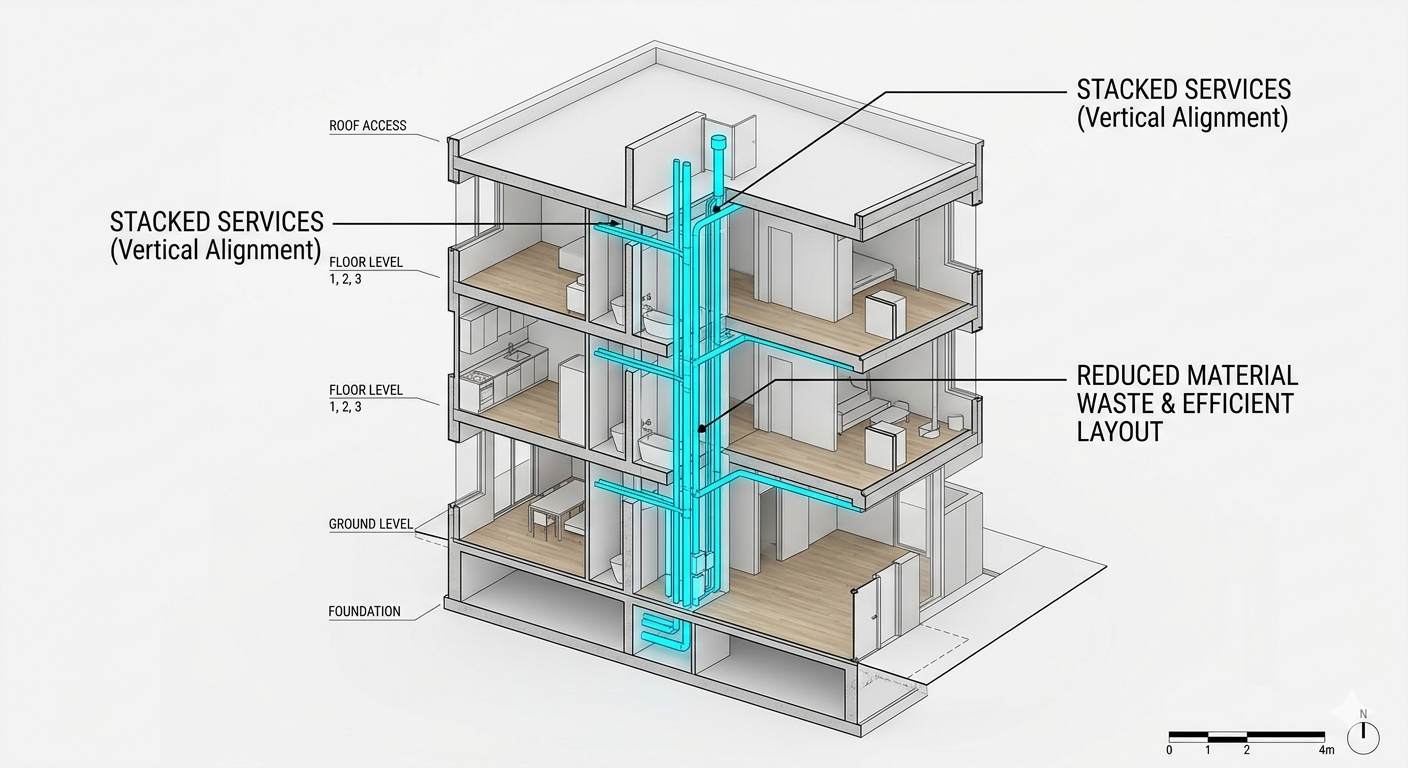
The largest variable in any development budget is the cost of construction. A design that ignores structural logic can increase build costs by 15–20% without adding a single dollar to the end sale price.
- The Transfer Slab Trap: In many poorly conceived apartment designs in Perth, the residential layouts do not align with the basement parking grid. This necessitates a thick, heavily reinforced concrete transfer slab to redistribute the building's weight. By aligning the structural "bones" from the foundation to the roof, we eliminate unnecessary concrete and steel, significantly reducing the build contract.
- Rationalised Services: We design for "wet area stacking." By aligning bathrooms and kitchens vertically, we reduce the complexity of plumbing and mechanical runs. This not only lowers material costs but also reduces the likelihood of onsite errors and delays.
2. Yield Optimisation and Land Cost Dilution
The most effective way to improve development feasibility in Perth is to dilute the land cost across the maximum number of saleable square metres.
- The Plot Ratio Maxim: We treat the plot ratio as a limit to be reached, not just a guideline. By meticulously managing the Gross Floor Area (GFA) and excluding non-countable spaces (like certain balconies or service areas as per local planning schemes), we "find" extra saleable space that lesser designs might overlook.
- NLA vs. GFA: A successful project maintains a high Net Lettable Area (NLA) percentage. We target a efficiency ratio of 85% or higher, ensuring that you aren't paying to build, heat, and maintain vast corridors or redundant lobbies that offer no financial return.
3. Sales Value and Market Velocity
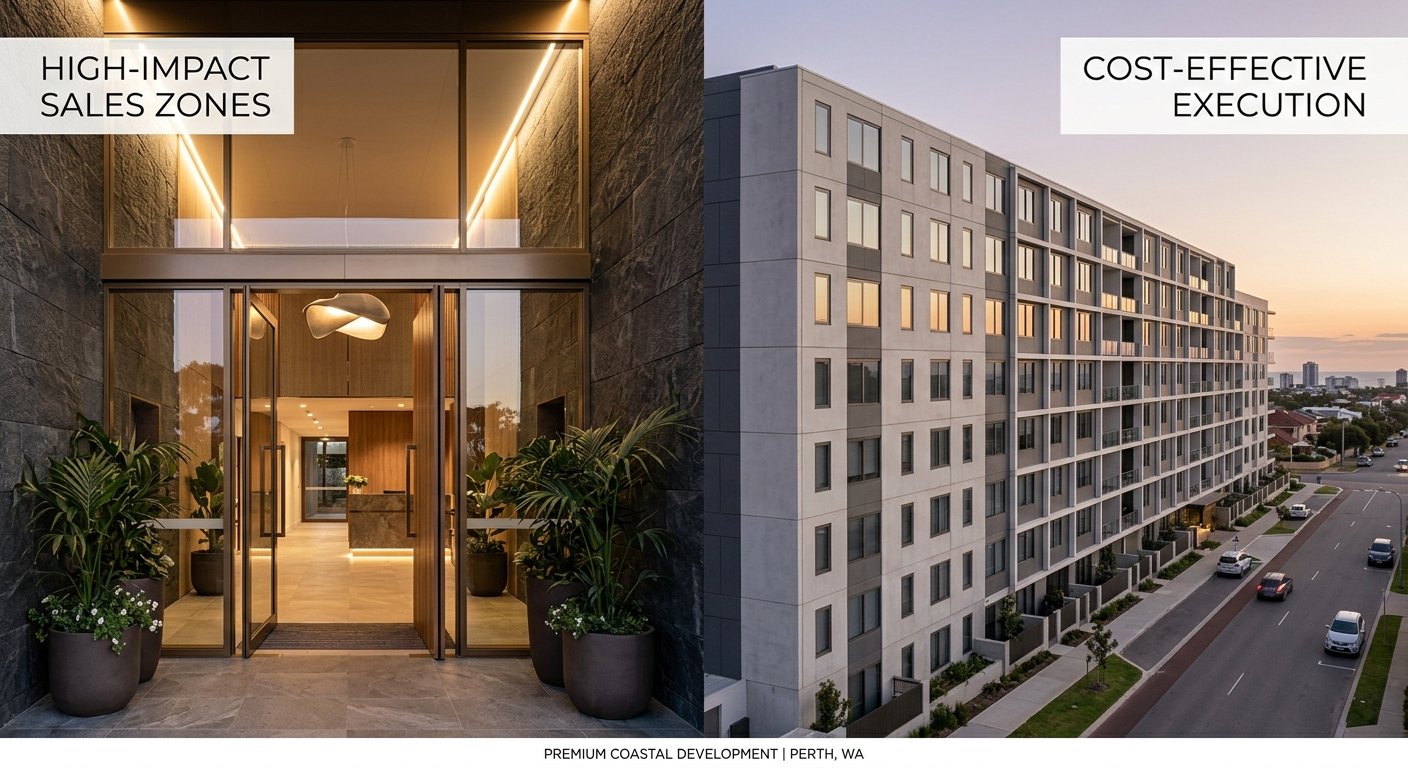
A project’s return is also dictated by how quickly it can be exited. In the Perth market, sales velocity is driven by a design’s ability to meet the specific "unspoken" needs of the buyer.
- The "Owner-Occupier" Premium: While investors look at yield, owner-occupiers look at amenity. By integrating smart storage, acoustic separation, and meaningful natural light (consistent with SPP 7.3), we create a product that commands a premium price.
- Curb Appeal vs. Cost: We focus on "high-yield aesthetics." This means investing the budget in high-visibility areas—the entrance lobby and the street-facing facade—while using cost-effective, durable materials for the rest of the building. This creates the "premium" perception required for rapid pre-sales without bloating the overall construction budget.
4. Navigating the Regulatory "Tax"
The Perth planning approvals process can be viewed as a regulatory tax on time. A design that is non-compliant or overly aggressive can lead to 12+ months of delays, during which time interest payments and holding costs erode the project’s margin.
Our economic approach to design involves:
- Risk-Adjusted Design: We provide designs that are "pre-validated" against local planning policies. By securing a faster approval, we reduce the duration of your construction loan, directly increasing your net profit.
- Future-Proofing: We design with a view toward evolving standards, such as NCC 2022 accessibility and energy efficiency requirements. Addressing these early prevents costly "retro-fitting" redesigns during the working drawings phase.
5. Long-Term Returns and Valuation
For developers holding assets long-term, the economics of design extend to lifecycle costs.
- Low Maintenance, High Retention: By selecting materials that withstand Perth’s harsh UV and salt-air conditions, we reduce future sinking fund requirements.
- Energy Efficiency: Smart apartment design in Perth that utilises passive solar principles reduces the ongoing operational costs for the strata body. Lower strata fees make the units more attractive to buyers and tenants alike, supporting higher valuations and rental yields.
The ROI of Professional Architectural Input
Good design is not an overhead; it is a profit-generating tool. At Ryan Tsen Architect, we understand that our role is to protect your capital and maximise your returns. By focusing on development feasibility in Perth and the technical rigour of construction, we ensure that the architecture serves the economics of the project—not the other way around.
Invest in a design that pays for itself. Contact Ryan Tsen Architect today to discuss how we can optimise the financial performance of your next Perth development.