
Perth Development Landscape 2025–2030

%20(1).png)
As we move toward the latter half of the decade, the Western Australian property sector is undergoing a fundamental shift. The era of low-density urban sprawl is being replaced by a sophisticated, medium-to-high-density model driven by state government mandates and changing consumer preferences. For those engaged in development feasibility in Perth, the next five years represent a window of opportunity—provided they can navigate the tightening regulatory environment and shifting economic drivers.
To remain profitable, developers must align their pipelines with the specific trends that will define the 2025–2030 period.
1. The Push for "Infill" and Transit-Oriented Development (TOD)
The State Government’s Perth and Peel @ 3.5 Million framework has set an ambitious target for 47% of all new dwellings to be infill developments. This is no longer a suggestion; it is being enforced through strategic rezoning around key transport corridors.
- Strategic Opportunities: Significant investment is flowing into areas surrounding the Metronet precincts. Developers who focus on apartment design in Perth within these transit hubs will benefit from streamlined Perth planning approvals and higher density bonuses.
- The Productivity Link: Proximity to transport is becoming the primary driver of land value. Projects that offer "car-lite" living—leveraging proximity to rail and bus interchanges—will see higher sales velocity as Perth’s population grows and traffic congestion increases.
2. The Rise of the "Downsizer" and Owner-Occupier Premium
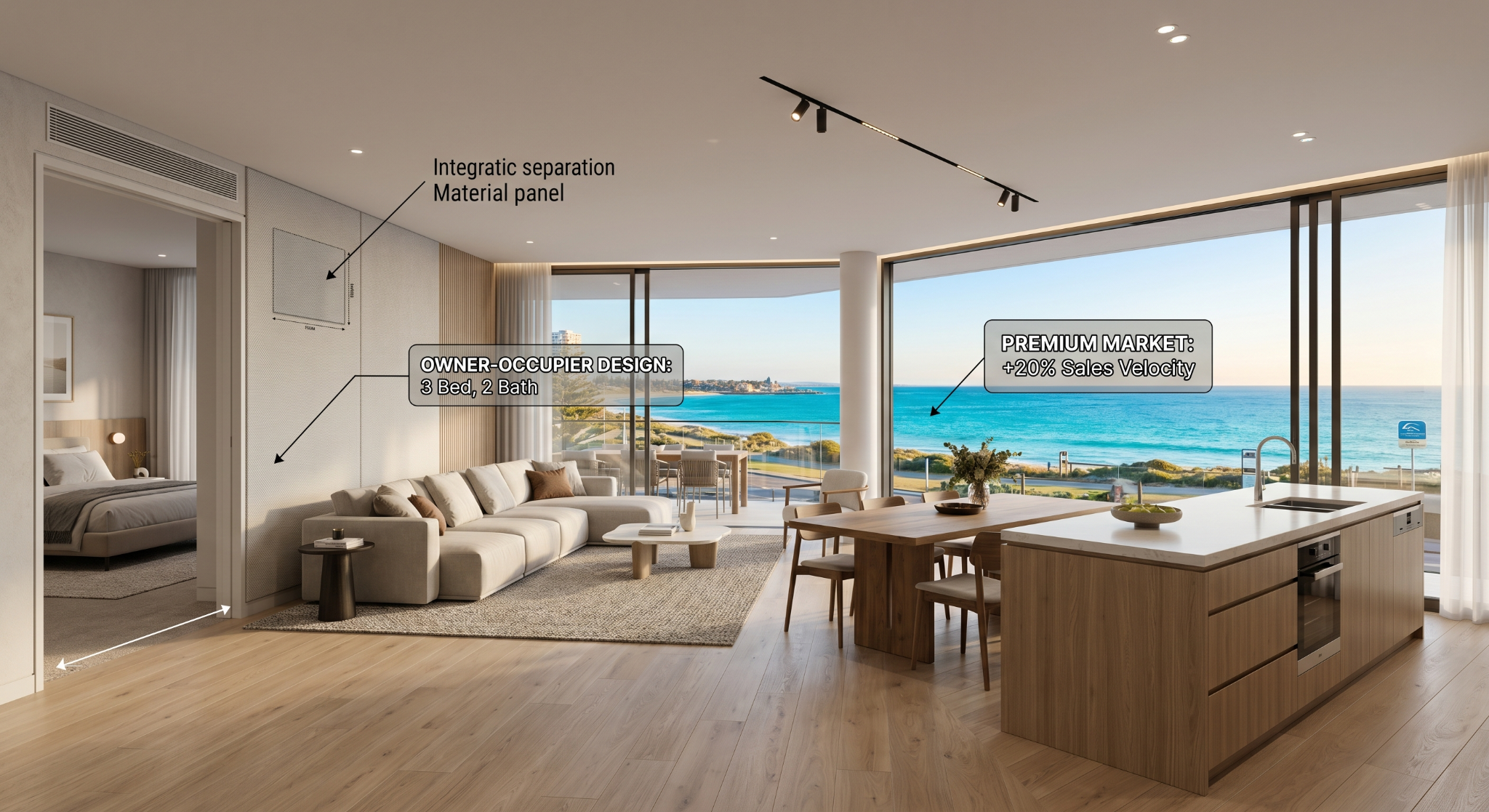
One of the most significant demographic shifts in the WA market is the move of "Baby Boomers" out of large family homes into high-spec apartments. This cohort is not looking for "cheap" housing; they are looking for "lifestyle" housing.
- Quality over Quantity: The 2025–2030 landscape will favour developers who move away from "investor-grade" stock toward larger, 3-bedroom, 2-bathroom configurations.
- Specialised Design: As Perth architects for developers, we are seeing a demand for universal design features—wider hallways, step-free access, and high-end acoustic separation—that cater specifically to this wealthy demographic. Securing this buyer profile is key to de-risking a project through early pre-sales.
3. Sustainability as a Financial Mandate
What was once considered "green-washing" is now a core requirement of the National Construction Code (NCC) 2022 and the upcoming 2025 updates. Future-proofing a development now requires a 7-star NatHERS minimum.
- Operational ROI: Buyers and tenants are increasingly sensitive to energy costs. Developments that integrate solar arrays, EV charging infrastructure, and passive solar design will hold their value longer and attract lower strata fees.
- Planning Incentives: Local councils are increasingly willing to grant height or plot ratio bonuses for projects that exceed minimum sustainability benchmarks. Smart developers will use "green" credentials as a lever to unlock extra yield.
4. Navigating the Construction Cost Plateau
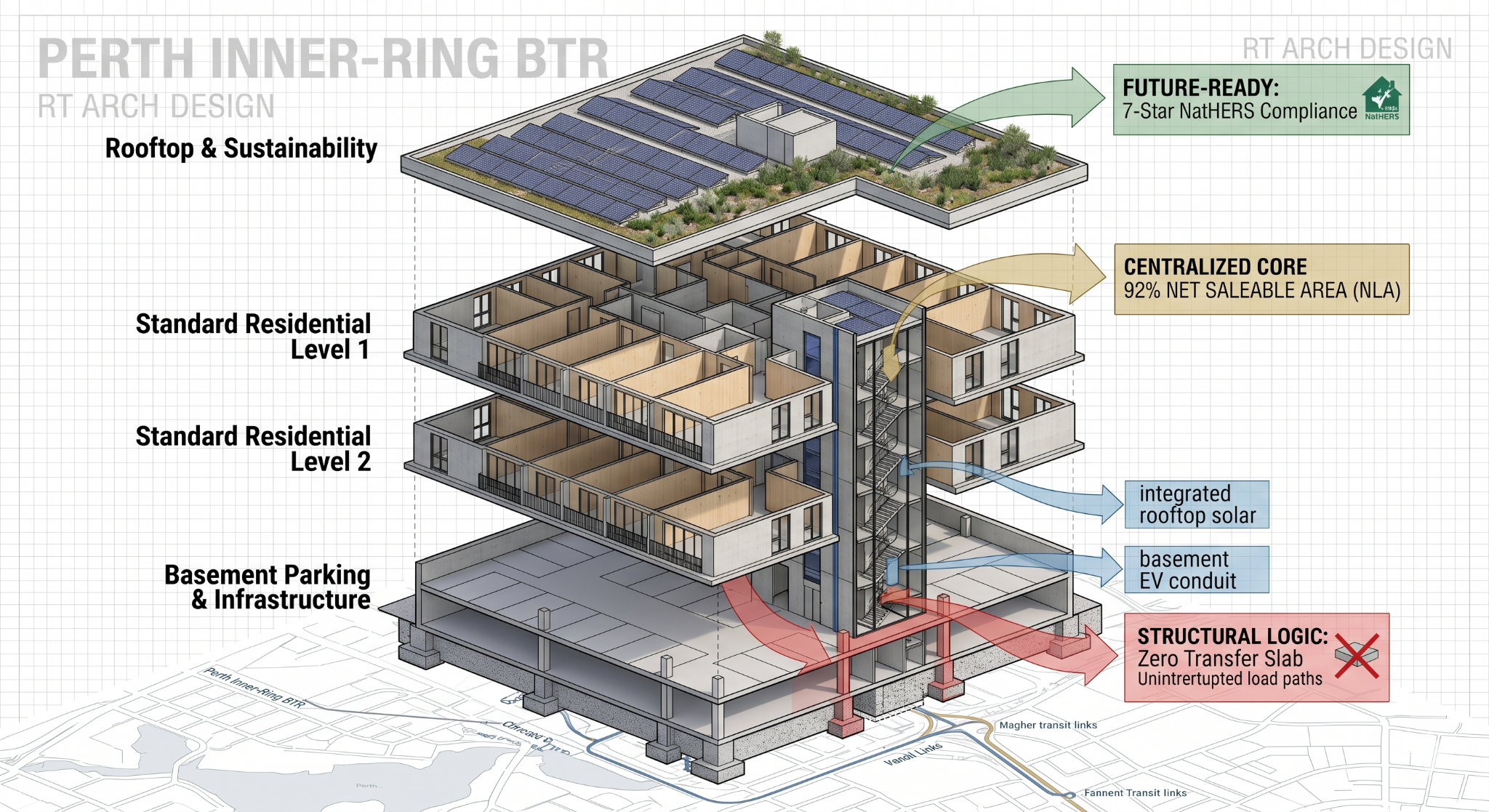
While the extreme price volatility of the early 2020s has begun to stabilise, labour shortages in Western Australia remain a systemic challenge. The economics of development feasibility in Perth now demand a "buildability-first" approach.
- Rationalised Design: To mitigate high labour costs, developers are choosing Perth architects for developers who can deliver "modular" or "rationalised" designs. This involves using standardised structural grids and off-site manufactured components to reduce time on-site.
- Risk Sharing: The next five years will see a move toward more collaborative "Early Contractor Involvement" (ECI) models, where the architect, developer, and builder work together during the documentation phase to lock in costs before the DA is even finalised.
5. The Institutional Shift: Build-to-Rent (BTR)
Perth has traditionally been a "Build-to-Sell" market, but the 2025–2030 period will see the maturation of the Build-to-Rent (BTR) sector. Driven by a chronic rental shortage and state tax incentives (such as land tax concessions), BTR offers a stable, long-term return for institutional and large-scale private developers.
- Design for Longevity: BTR requires a different architectural mindset—prioritising durable materials, low-maintenance communal spaces, and integrated building management technology.
- Yield Stability: While the initial capital requirement for BTR is higher, the long-term rental growth in Perth’s undersupplied market provides a hedge against the cyclical nature of apartment sales.
Conclusion: Adapting to the New Normal
The Perth development landscape from 2025 to 2030 will reward those who prioritise efficiency, compliance, and market-specific product mix. The "buy and hold" or "simple subdivision" strategies of the past are being replaced by complex, multi-residential projects that require expeRyan Tsen Architectitectural guidance.
At Ryan Tsen Architect, we are dedicated to helping developers navigate this new era. By combining deep technical knowledge of Perth planning approvals with a commercial focus on yield, we ensure your projects are not just compliant, but highly profitable.
Is your 5-year pipeline ready for the shift? Let’s discuss how we can position your next project to capitalise on these emerging trends.