
Case Study: Unlocking Site Value

.png)
In property development, the difference between a project that barely breaks even and one that delivers exceptional returns often comes down to the initial architectural strategy. This case study explores a typical infill site in a high-growth Perth corridor and demonstrates how a shift from a "standard" design approach to a developer-focused strategy fundamentally altered the project’s development feasibility in Perth.
The Challenge: A Restricted Suburban Site
The client acquired a 1,200m² corner lot in a medium-density residential zone. The initial "off-the-shelf" assessment suggested a standard six-villa development. However, once holding costs, rising construction rates, and Perth’s current market demand for higher-quality dwellings were factored in, the six-villa model yielded a marginal profit that failed to justify the risk.
The developer’s objective was clear: increase the yield and the end-sale value without triggering a prolonged, high-risk battle for Perth planning approvals.
The Strategic Shift: From Villas to Apartments
As Perth architects for developers, we identified that the site’s corner location and proximity to public transport made it an ideal candidate for a "Boutique Apartment" model rather than traditional villas. By moving from a single-storey horizontal layout to a multi-storey vertical configuration, we could capitalise on the site's plot ratio rather than being limited by ground-floor setbacks.
1. Maximising Yield through Plot Ratio Optimisation
Under the R-Coding for the site, a traditional villa approach left significant "air rights" unused. We redesigned the scheme into a three-storey residential building.
- The Result: The yield increased from 6 villas to 12 high-specification apartments.
- Financial Impact: Even with the higher build costs of a multi-storey structure, the doubling of the unit count significantly lowered the land cost per unit, immediately improving the development feasibility in Perth.
2. Efficient Apartment Design in Perth
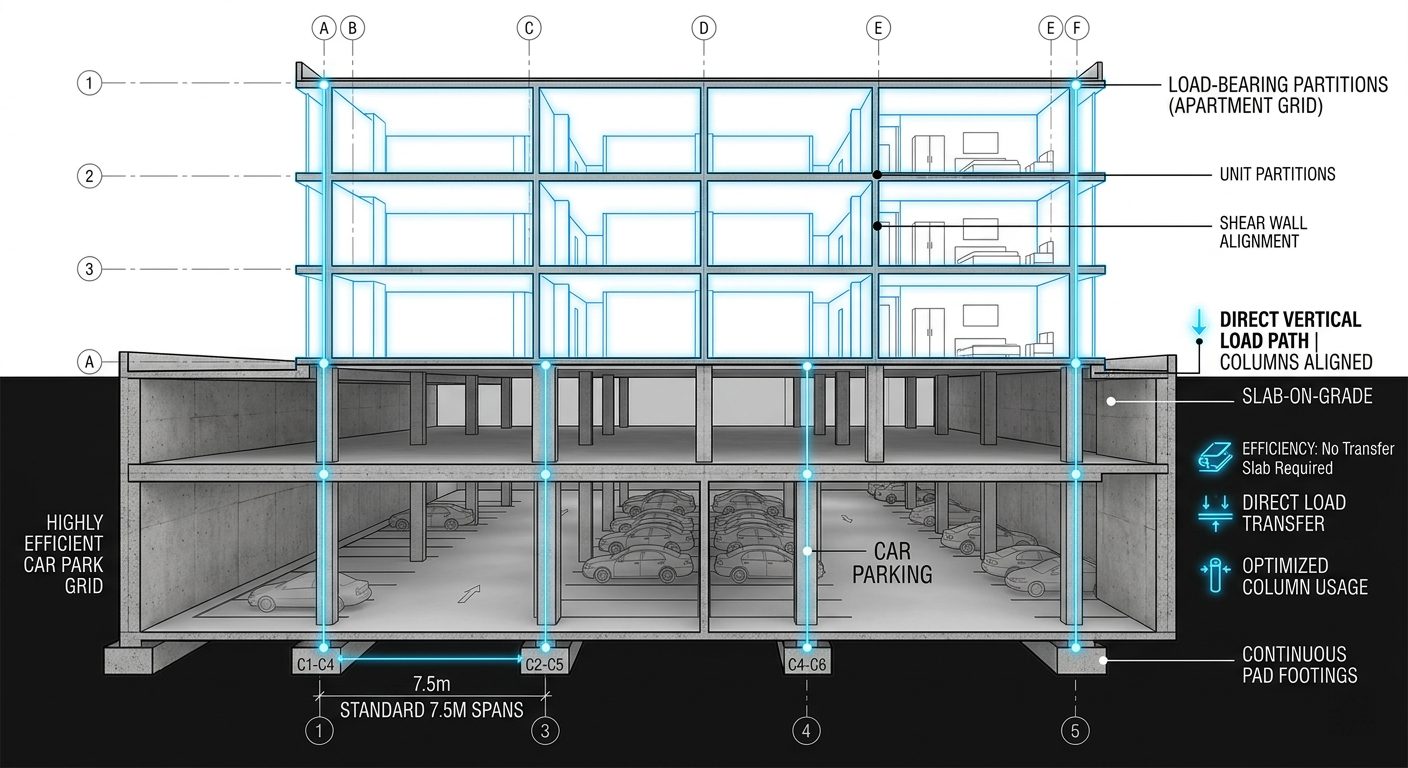
To ensure the 12-unit scheme remained profitable, we applied rigorous efficiency standards to the floor plates:
- The "Zero-Waste" Corridor: We utilised a single central lift and stair core, reducing the non-saleable common area to less than 12% of the total building area.
- Standardised Spans: We aligned the apartment partitions with a 7.5-metre structural grid, allowing for an efficient basement car park layout that avoided expensive transfer slabs.
- The ROI Lever: By keeping the structure simple, we ensured the project remained attractive to a wider range of mid-tier builders, keeping tender prices competitive.
3. Navigating Planning with Precision
To secure Perth planning approvals for a three-storey building in a predominantly two-storey streetscape, we utilised the "Design Principles" of the R-Codes.
- The Strategy: We stepped the third storey back from the street boundary to minimise the perceived bulk and scale. We also integrated "Deep Soil Areas" into the corner landscaping to meet the latest green-cover requirements while providing a private communal garden for residents.
- The Outcome: The project was approved by the local council under delegated authority within four months, avoiding the uncertainty of a full council hearing or JDAP deferral.
4. Increasing End-Sale Value
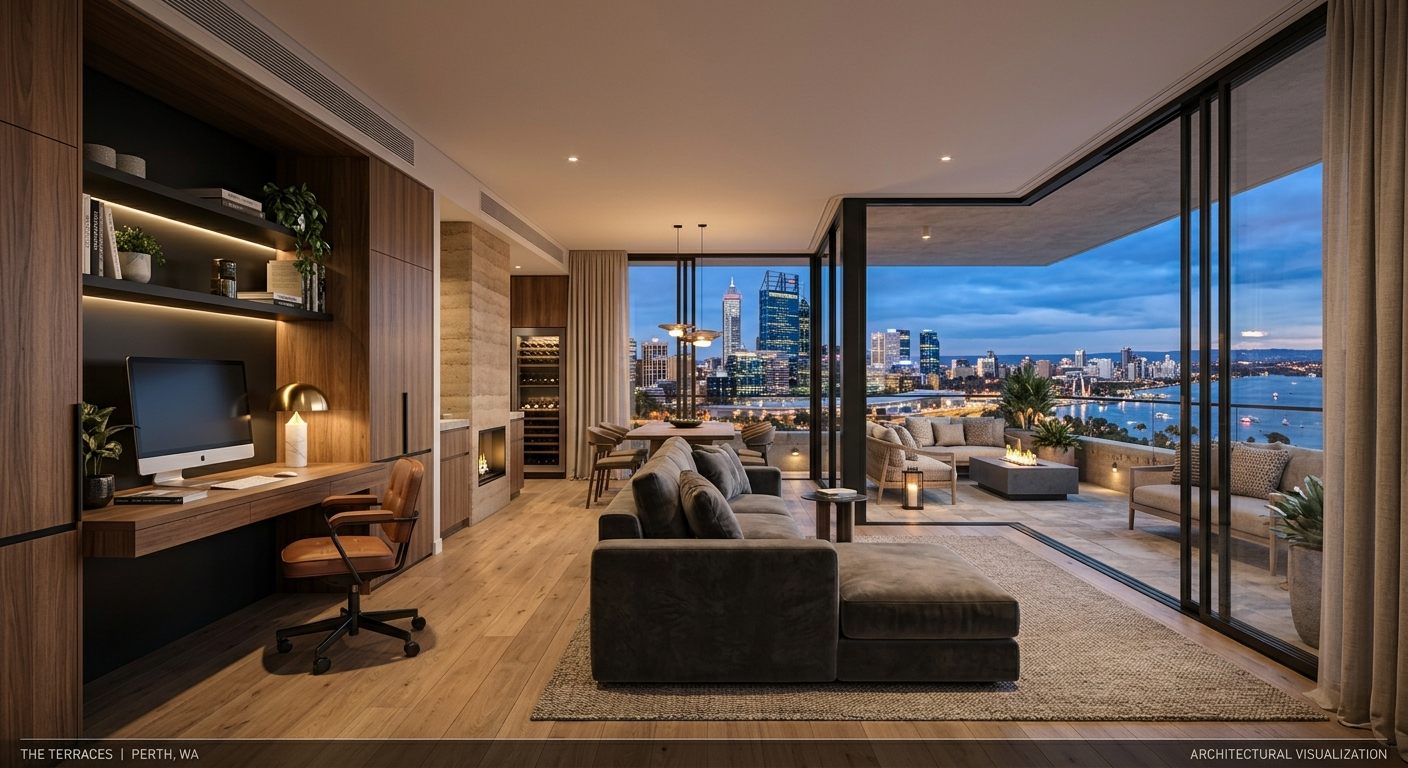
Smart design isn't just about saving money; it’s about making money. By elevating the apartments to three levels, we unlocked views toward the city skyline that were previously hidden.
- Market-Led Product: We dedicated the top floor to larger 3-bedroom "owner-occupier" units, which command a higher price per square metre in the Perth market compared to investor-grade 1-bedroom units.
- Sales Velocity: The inclusion of "Work-from-Home" nooks and oversized balconies—essential for modern apartment design in Perth—led to 70% of the project being sold off-the-plan within the first eight weeks of marketing.
The Final Comparison: Standard vs. Smart Design
Metric Standard Villa Scheme Ryan Tsen Architect
Apartment Scheme
Total Units 6 12
Total Saleable Area 720m² 1,080m²
Land Cost per Unit $250,000 $125,000
Projected ROI 12% 24%
Conclusion
This case study proves that yield is not just a matter of site area; it is a matter of architectural intelligence. By applying a commercial lens to the design process, we transformed a stagnant site into a high-yield asset.
Perth architects for developers must be able to see beyond the obvious. At Ryan Tsen Architect, we specialize in finding the "hidden units" in your site and ensuring they are delivered through a compliant, buildable, and profitable scheme.
Does your current site feel underutilised?
Contact Ryan Tsen Architect for a feasibility audit. Let us show you how smart design can unlock the true value of your Perth development project.